18 Aug 2011

Is wine a more homosexual drink than beer?

This tongue-in-cheek thought was triggered today by wine writer Andrew Neather who, in his latest Evening Standard column, said:

"…there remains a more deep-seated suspicion of "expensive" wine among many Brits: a notion that it's a waste of money because you can't really tell the difference between that and the cheap stuff (and that anyone who claims to be able to do so is certainly "elitist", possibly homosexual.) It's ignorant tosh…"

I think he's talking homosexual from a male rather than female point of view here. You're in a pub with your mates, it's your round, and you come back from the bar with a tray of northern Rhône syrahs instead of beers. Even worse, you give the glass a good swirl without thinking and comment on its amazing peppery scent. And you get called gay. (We won't even think about what happens if you buy an even gayer wine like a Provence rosé.)

When you bought a round of craft beers the previous day and did a similar thing, talking with your mates about its hoppiness and its frothy head and its citrussy flavours, they didn't laugh you out of town. You were still a man's man! In a non-gay way!

How would you explain this difference to an alien from outer space, or at least to a non-Brit? Why is beer drinking manly and wine appreciation camp? (Come to think of it, on a related note, why do wine writers sometimes refer to certain wines as being "feminine" in style? Actually, save that thought for another day.)

Cost has something to do with it. You can enjoy the world's best beers for just a few quid, so they're way more accessible to the working man than the really interesting wines, which aren't cheap. So perhaps wine is traditionally associated with showy wealth. But it seems to be a cultural or class-based thing as well as an economic one. Working class people have better bullshitometers than the middle classes – and a lot of nonsense has been talked about wine in the past in order to make it seem more exclusive than it needs to be, so it turned off old-fashioned modest Brits. But we're in a new era now. Wine can be demystified. While not settling for anything less than well-made drinks, we don't need to be aloof or scary.

We're living in a time when it's quite common for people to take out finance to buy an expensive car or to spend £40+ a month on a mobile phone contract. And even if a cheaper second-hand car or a more basic phone would've done the job, they probably won't be called a snob, or homosexual as Andy Neather might put it, for stretching beyond their means to get something better. So why is it snobbish to spend a bit more on wine?

17 Aug 2011

A tour of the newly refurbished City Varieties Music Hall in Leeds


I was lucky enough to go on a tour of the City Varieties today. What a building.


It was built in 1865 and it's a beautiful theatre, one of the last remaining and best preserved Victorian music halls. It's amazing to think Charlie Chaplin and Harry Houdini performed here.
  

A major refurbishment (costing almost £10m) has now just about been completed. During the building work over the past couple of years, they found lots of items under the floorboards beneath the seats - trivial everyday things like old sweet wrappers, cigarette packets and small glass containers (it's interesting to wonder, did theatre-goers carry medicinal liquids or alcoholic drinks in these little jars?).

These things might seem like unspectacular items, but I think it's really special to think each thing was left by someone who was sitting in the theatre enjoying a show at some point in the last hundred years or so, perhaps smoking and drinking as they watched a show in this beautiful gas-lit room, their presence frozen in time.


And I learned some more exciting news - the Swan pub next door to City Varieties (which has also been given a refurb) is almost ready to reopen - and it's going to be run by Leeds Brewery. It seems very fitting they'll be running this old coaching inn next to this great old music hall. Although they're a young company, they are carrying on the great brewing traditions established by Joshua Tetley here in Leeds. So with a respectful nod to the past, this old street in Leeds is all set to embark on an exciting new chapter.

16 Jul 2011

Michael Broadbent and a whiff of merde

The award for tasting note of the month has to go to veteran Decanter columnist Michael Broadbent. In his column in the magazine's August issue, this is how Broadbent describes Louis Jadot's 1999 Charmes-Chambertin wine:

"Though a long-time admirer of Jadot," Broadbent reflects, "I was disappointed. It was showing some maturity; nose low-keyed, slightly meaty, with a whiff of merde. I thought it was better on the palate: sweet, silky, mature."

5 Jul 2011

The War of Terroir: Beer vs Wine

Wine writer Tim Atkin triggered a debate on Twitter yesterday about beer and wine. Although he loves both drinks, he believes wine is more complex, is better suited to food and has a greater sense of place. Some beer fans said they disagreed – and so far I've seen one blogpost in response arguing that terroir does exist in beer.

I'll leave the complexity and food matching arguments (which I touched on here) for another day, but for now I have to say I agree with Atkin on his point about sense of place, or terroir.

What is terroir? Put simply it's the impact that the physical conditions of a specific location have on the grapes that are grown there. So the character of the wine in the bottle will reflect the character of the terroir (to some extent – many other factors such as grape varieties, the use of oak and other winemaker interventions play a big part too). There are so many different aspects specific to a vineyard's location that are said to affect the grape: the minerals in the soil; wind; rainfall; levels of sunlight; altitude; differences in day and night time temperatures. This is partly why wine, old world wine in particular, is often referred to by location rather than by grape type; the location is synonymous with the wine. Bordeaux, Burgundy, Rioja and so on. Just a mention of the words Bordeaux and Burgundy immediately conjure up images of certain types of wines. (For a further exploration of terroir, try here or here.)

Is the same true of beer? I don't think so. Not to the same extent. There are exceptions, but as a general rule a much more useful way of categorising beer is by style rather than by origin. Beer people tend to talk about porters, stouts, pale ales, lagers, bitters; less so London, California, Buxton, New South Wales or wherever. Yes, certain types of beer have traditionally tended to predominate in certain places, but overall with beer it's more a case of anything goes, hence less of a link to the physical locality.

Also, terroir in wine is said to be a very localised thing. You can get two vineyards within metres of each other that produce wines of different character when all else is equal. I'm no expert on either winemaking or brewing, but by its nature, brewing beer doesn't appear to be so intrinsically tied to the specifics of the land.

That's not to say it's a good or a bad thing, or even how significant it is. A lot of drinkers probably don't really care where the drink was made or if the local environment affected what it tastes like, they just know what they like. It's also debatable how much the concept of terroir is exaggerated, like a kind of placebo effect, a desire on the part of the wine lover to feel the soul of a place as they drink its wine. This is a powerful inclination when you really love wine.

It's also worth pointing out that terroir is not the sole reason for wines being very identifiable by region: in order to qualify for local denomination status, winemakers often have to adhere to strict rules that govern things like the types of grape varieties they are allowed to use. This is where human activity impinges on pure terroir. But nevertheless, in new world areas where there are no such rules, winemaking areas still show their distinct characters in the wine.

But beer fans shouldn't feel wholly negative about all this. Firstly, it shows that the beer world enjoys the freedom of the new world. Brewers can make what they like, where they like, and this leads to radical levels of experimentation, pushing at the boundaries of beer. Loads of new British breweries seem to be using exotic hops lately – which might not express much in the way of the terroir of the brewery, but it can produce some very tasty and interesting beer. Secondly, this isn't to say that beer can't ever have terroir. Perhaps if breweries really started to think local in every sense, a growing sense of terroir could develop further. The idea of vintages is already part of some beers, so why not take it one step further? More use of local or wild yeasts and local hops and of telling us how the local water plays its part. From a marketer's point of view as well as a drinker's, it could be a savvy move.

Also, all of this isn't to say that beer isn't hugely important to local communities. It is. But more in a social and cultural sense than a physical one. Like wine, beer brings people together; it melds communities; it smoothes out the rougher edges of life. And it can taste great. But for true terroir, it doesn't yet come close to wine.

2 Jul 2011

Enjoying some local Yorkshire Food at Swillington Organic Farm, Kirkstall Deli Market and Leeds Loves Food


I've enjoyed some great local food events here in Leeds over the past couple of weeks or so.

I visited Swillington Organic Farm as part of an event put on by Harvey Nichols - I got to have a look around the farm before enjoying a meal cooked by Harvey Nics' chefs accompanied by wine from Leventhorpe Vineyard just down the road. Despite the vineyard being as far north as Leeds, I was really impressed by the seyval blanc in particular, a crisp, bone-dry white wine. It might be surprising to hear of a vineyard in Yorkshire, but apparently centuries ago vines were grown at Kirkstall Abbey and even as far north as Hadrian's Wall!


Having a wander around Swillington Farm really brought home how, in cities at least, the people who produce our food and those who buy it have become so distanced, especially with the rise of the supermarkets. We buy stuff without sparing much thought for where it came from. It's a massive change from our grandparents or great-grandparents' generations, who had nowhere near the choice we are lucky enough to have, but at the same time they surely had more of a real connection to where their food came from, especially given more local specialists (butchers, bakers, greengrocers, milkmen etc) existed in those days. 


And then last weekend it was a visit to the magnificent Kirkstall Abbey (pictured above and top - a spectacular 850 years old and one of the best preserved abbeys in the country) for the Kirkstall Deli Market, where there was a good amount of local producers selling their wares - seafood from Whitby, various jams and chutneys and fresh fruit, meat from Swillington Farm, plus the likes of Dough, fish'n'chips with a twist from Fish&, and booze from Latitude. Also pretty sure we spotted Leeds singer Corinne Bailey Rae having a day out there too. A really good event in stunning surroundings - would recommend any locals to visit the next one on 30th July.

Lastly, today was the Leeds Loves Food festival at Millennium Square in the city centre - great weather, absolutely packed, and again the brilliant thing about it was the number of small independent businesses on show. The recent Taste of London event came in for a bit of flak with some saying it was overly corporate, but you couldn't say that about Leeds Loves Food, which seemed to have a really good mix.

21 Jun 2011

An Argentinian Wine Tasting with Gaucho's director of wine Phil Crozier

This was a great event at Gaucho's Leeds restaurant, not just because of the wines, but also thanks to the knowledge and enthusiasm of our host, Phil Crozier. He has that great combination of being extremely knowledgeable and passionate about a subject but with an ability to speak about it without pretentiousness.

He's an interesting character: having started out as a musician and then going into sound engineering, he sort of drifted into the wine trade. He modestly says a lot of it was down to being in the right place at the right time: it was the mid-90s and Argentinian wine exports were just taking off, enabling him to transform Gaucho's wine list. Phil says he essentially worked through a list of wine importers, going from A-Z, and ended up with a room packed full of sample bottles to work through all on his own. Not knowing much about wine at the time didn't stop him: the best way to learn was to taste, taste and taste again. Here he is now as a successful restaurant chain's head of wine and a leading authority on Argentinian wine.

On to the wine. This tasting was all about showing what Argentina can do aside from Malbec. Not because there's anything wrong with the country's Malbec, far from it, but to show that the country isn't a one-trick pony and to highlight a growing appreciation in Argentina that different grape varieties can thrive in different areas.

We tasted five wines, one white and four reds, and my two favourites were a Cabernet Franc and a Tannat. Two varieties that are less common than Malbec on the supermarket shelves - certainly in the Argentina section - but I think they showed really encouraging signs that there is a hell of a lot more to come from Argentinian wine.

Catena Cabernet Franc 2008, from the Uco Valley in Mendoza, shows the kind of elegance that Argentinian wines can achieve: sprigs of mint and eucalyptus on top of fresh red fruit, creating a really fresh, balanced mouthful. No surprise the 2009 vintage won gold at the recent Decanter World Wine Awards.

Probeta Tannat 2010, from fruit grown at an altitude of 1,750 metres up in the region of Salta, is a beguiling wine with herbal aromas you can't quite put your finger on - rosemary and thyme and sage, perhaps, with some blueberry fruit. The mouthfeel is a touch firm - Phil pointed out you get a sense of green tea on the finish due to the tannin - so this could soften into an even more impressive wine in a couple of years. He also points out that in Salta you have perhaps 50 days extra ripening compared to Bordeaux, giving this tough, temperamental grape more time to ripen into something beautiful. He believes Tannat may well represent the future for the north of Argentina, and with this one I can see why. Really, really good.

The other three grape varieties we sampled were Torrontes, Petit Verdot and Bonarda. Seleccion G Michel Torino Torrontes 2010 was a bit too richly perfumed for my personal taste, but many will love the freshness and floral flavours of elderflower and slightly sweet lime marmalade. Emma Zuccardi Bonarda, another Decanter 2011 medal winner, smelt quite big and alcoholic in the glass, with a menthol aroma too. In the mouth it was packed with jammy fruit that was a touch sweet for my taste but nevertheless a good example of what this originally Italian grape, the second most planted in Argentina, can create. Finally the Pinca Decero Petit Verdot 2006 was a big dark wine with stocky legs that stuck to the inside of the glass when you gave it a swirl - a real winter warmer. When speaking about the aroma, Phil evoked childhood memories of pencil shavings in the classroom, and he was spot on.

It was a really inspiring, enjoyable tasting.

12 Jun 2011

Craft Beer Labels

I bought these bottles at Beer Ritz in Leeds. It's noticeable how a lot of good beers have really nicely designed labels now.

The Italia, in the centre of the picture, is the result of a collaboration between English brewery Thornbridge (based in Bakewell) and Italian brewery Birrificio Italiano (based in Marinone, just east of Turin). A lovely fresh pilsner style beer with a slight zesty hoppiness, chilled right down it made for a very nice early evening drink back at home after a warm day out. Invigorating stuff, well made, tasty.

9 Jun 2011

Moncaro Verdicchio dei Castelli di Jesi Classico 2010, £4.99 (Waitrose)


You'll see the glass is empty in the photo, which is all you need to know with this one - this bottle won't last long. An ideal easy drinking midweek white for spring/summer time, especially in terms of value for money. I bought it this evening as a cheap bottle off the cuff, without expecting too much, when I called into Waitrose in Leeds for some pizza on the way home from work.

Fresh, pure, dry, pretty uncomplicated and with an almost olive oil-like texture. In fact both the flavour and texture bring to mind a little olive oil with a dash of fresh lemon juice stirred in - so it's a very good food wine.

I've just referred back to the 'Top 5 Italian White Wines from Waitrose Spring Collection' on Vinissima, and I'm not surprised to see this one on there.

It is a bargain - and in fact I've just noticed the 2009 is only £4.74 per bottle on the Waitrose website.

Moncaro Verdicchio dei Castelli di Jesi Classico 2010, Italy
Waitrose
£4.99

7 Jun 2011

Working on a new drinks menu at Dough Bistro, Leeds

At the weekend I was lucky enough to get a sneak taster of some of the new dishes from the June menu at Dough Bistro here in Leeds. Every single dish I tried hit the mark: perfectly fresh, local ingredients, skillfully cooked.

I was discussing the subject of wine and beer matching with chef/owner Luke Downing, who's looking to revamp his drinks menu. We made one or two interesting findings, and I'm in the process of thinking about some more potentially interesting matches for his food.


A light blonde ale with a subtle hoppiness worked very nicely with a lovely dish of hake and samphire, while a brown ale proved to be an unexpected top performer with various different dishes, perhaps showing the great versatility of that classic type of beer. As I ponder some more matches, I've got plenty of food for thought.

6 Jun 2011

Beer and drama: Breaking Bad and some homebrewed Amarillo ale


There have been some outstanding US television dramas over recent years. Breaking Bad is the latest we've discovered. A really brilliant show, in the classic thriller style but a very human drama at its heart. The main character Walt has been diagnosed with terminal lung cancer and he decides to produce and sell crystal meth so that his family aren't left bankrupt when he dies. Like all the great recent US dramas, it intelligently travels through the hazy shades of grey in the human condition, leaving the viewer to make up his or her own mind. Highly recommended.

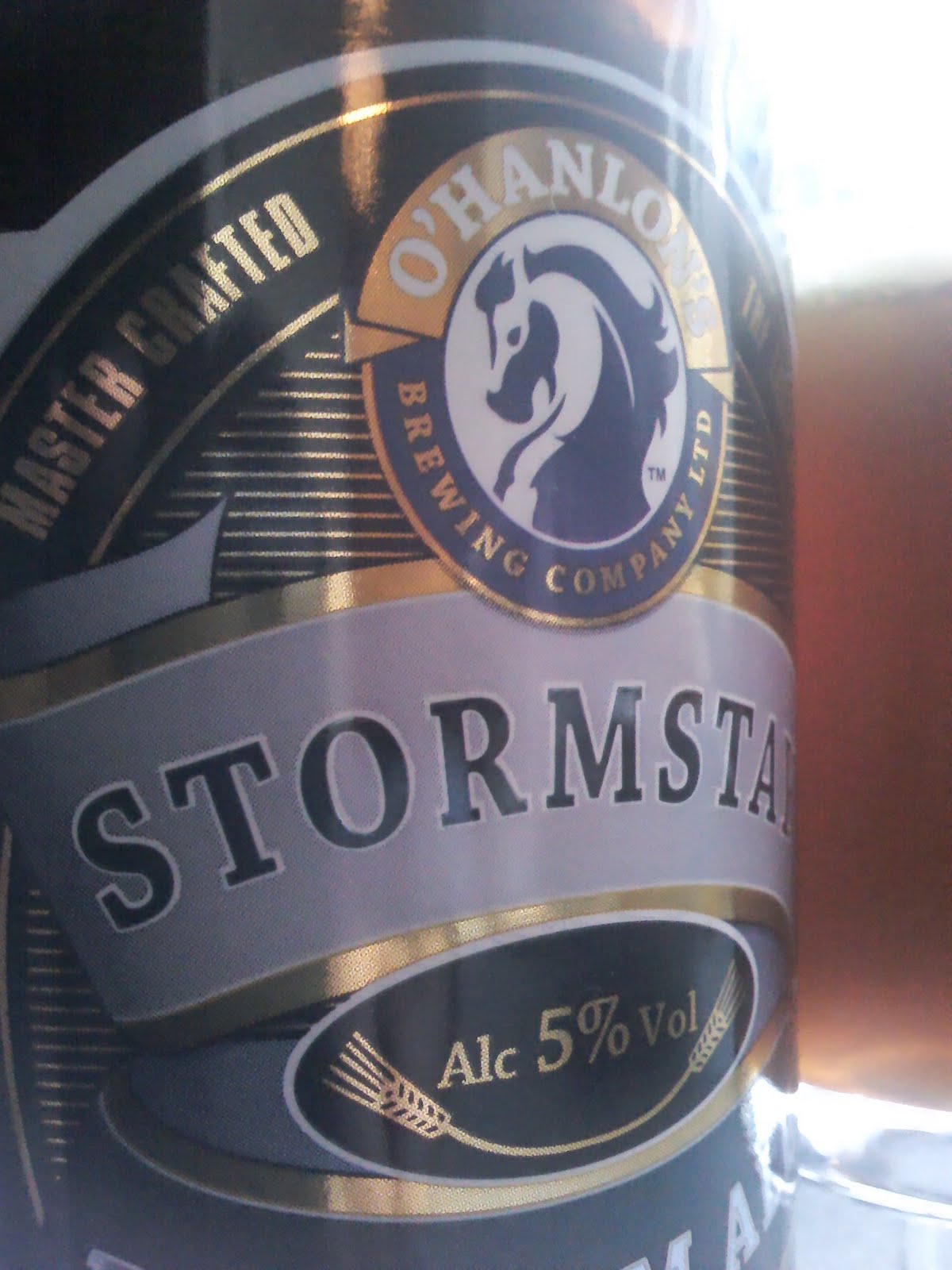
Given that the Breaking Bad DVDs were a present from my brother Matthew and his wife Angela, it was nice to accompany the conclusion of Season 2 with one of their latest homebrews: Amarillo Easy (4.1% abv). It was appropriately brewed with an American hop, Amarillo (like the O'Hanlon's Stormstay ale I enjoyed recently - which incidentally also contained crystal malt... not crystal meth).

And the Amarillo Easy was a great match for the drama, showing the verve of a New World pale ale but with a welcome lightness of touch, plus just a hint of that faint horse blanket aroma reminiscent of a good Belgian ale, all balanced out with the sweetness of caramelised brown sugar and a satisfyingly long finish.

Beer and drama.

27 May 2011

Balance – is it as important in beer as it is in wine?

I've had a few beers lately that I've really enjoyed and that, when I thought about it, shared a common characteristic: balance. Or drinkability, for want of a better word. Tasty, refreshing and with sufficient interest, but not hitting you over the head like a lunatic and saying how manly they are.

With beer, you could draw a straight line and write the word 'challenging' at one end and 'drinkable' at the other. Now I might be totally wrong, but I suspect there's a fashion at the moment in the craft beer world for stuff that errs more towards the challenging or extreme. Some of these beers can be really interesting to drink - but personally I sometimes find the first sip is the one I enjoy the most. And that's not ideal. After three or four gulps of a more extreme beer my palate can feel like someone's been at it with a steam-powered wallpaper remover. Interesting flavours, challenging, but not something I'd necessarily want to drink regularly. Perhaps this kind of beer is playing to a macho I-can-eat-a-hotter-vindaloo-than-you mentality. You can't imagine many women being daft enough to bother with some of these drinks beyond the first sip.

Of course it depends on the occasion; there's a time and place for a more extreme beer. And it's worth noting the caveat that more extreme beers can still be in balance; choc-full of flavour but with all notes singing in harmony.

But the beers I tend to enjoy most are the ones where everything is nicely in balance and that I don't tire of after a few gulps. And by that I don't mean boring; it's easy to confuse the idea of balance with lack of flavour. It's not that at all - sometimes it might even be the addition of more flavours, sometimes it might be fewer, to strike the balance. A food analogy would be using a pinch or two less of chilli powder to tone down the spice, or perhaps adding a squeeze or two of lemon to freshen it up.

Like anything sensual, it's of course subjective to some extent - one drinker's idea of balance won't be the same as another drinker's. Some of us prefer more bitter flavours, for example. It's all about personal taste, as well as mood, context, what you're eating (if anything) - the time of year, even. Which are some of the things that make food and drink so interesting.


So what were the finely balanced beers I've had recently that slipped down so easily? The first was the acclaimed El Bulli chef Ferran Adria's beer, Inedit, brewed by Estrella Damm – nothing exceptional you might think on trying it, but an intriguingly light mouthfeel, and just so damn tasty and refreshing. Perhaps a touch sweeter than I'd regularly go for and it may not be earth shattering but, as was intended with this brew, it's very food-friendly.


Another very nice beer I had recently was Stormstay Premium Ale, from O'Hanlon's Brewery in Devon, which is also a beer that I suspect might not satisfy the label drinkers looking to tick off the latest new world hop bomb. It struck that fine balance between hops and malt, with a subtle caramel depth underpinning the fresh green hop flavours. I really enjoyed this beer. If it was a stranger at a party it wouldn't skip quickly from person to person and talk about itself as certain other craft beers might; instead it'd be an understated but likeable presence with a touch of class. I thought it had a nice balance and a slight zip of acidity reminiscent of a good sparkling wine.


Going back to the fashion for extreme beers: it does seem to be specific to beer. Wine writers seem to be more preoccupied with elegance and structure. The reason for this difference, I'm not sure. It could quite simply be that when we drink a glass of beer or a glass of wine, we're looking for different things, and the difference in the tone of coverage reflects that. Perhaps an extreme IPA is only meant to be enjoyed for a few sips - that's the whole point, it's not designed for session drinking.

Or another theory could be that the craft beer revolution - for want of a less tabloidy term - is at an earlier phase than that of wine drinking (if that's the case it's ironic, given the long history of beer brewing and drinking in Britain). Perhaps the over-the-top late-hopped IPAs or quadruple imperial black quadruple chocolated stouts (I exaggerate) are the beer equivalent of the over-oaked chardonnays or the harsh one-dimensional sauvignon blancs wine lovers tired of to some extent in the 1990s and early-2000s, and beer fashions will evolve in much the same way over time. If this is the case, some classy but currently underrated more traditional British and Belgian ales, for instance, might enjoy a resurgence as beer drinkers become weary of yet another new wave British or American brew. When I drank a couple of Rochefort ales recently I was thinking what classy brews they were.

It's all about time and place. Sometimes the grapefruity hit of a New Zealand sauvignon blanc or an American IPA just hits the spot, just as a gin and tonic or a really very hoppy pale ale does, but at other times the moment calls for a deep, mellow porter by the fireside, or a savoury, herby syrah from the Northern Rhone. More often you're going to want the over-the-top hoppy pale ale as an aperitif as you would the G&T; the less extreme ales will more likely do you for a meal or a session.

But if beer wants to catch up with wine as a respected match for food, I think there might just need to be a slight shift in emphasis towards balance. Good Italian wine is often so very food-friendly thanks to its pure fruit flavours and fresh acidity (not to mention its sense of place), and it doesn't need to shout about itself. Over-oaked fruit bomb wines, on the other hand, are less likely to complement food quite so easily. I'm certainly not saying it's impossible to match foods with drinks that have extreme flavours, but it is more tricky.

The key point is that there's a time and a place for any well-made drink. But if beer wants to gain more respect at the dining table, and among drinkers generally, I'd say balance is an important thing to bear in mind in the long run. The craft beer movement will struggle to win over set-in-their-ways Stella drinkers on the one hand or set-in-their-ways Bordeaux drinkers on the other if it tries too hard and veers too far towards the extreme.

*The picture at the top is a pint of Timothy Taylor's Landlord on cask and some mini fish'n'chips. Lovely.
*Anyone in Leeds reading this can buy a 75cl bottle of Inedit from Latitude Wine for just under a fiver, or from Harvey Nichols for just over a fiver.

23 May 2011

Supermarkets: bringers of affordable food & drink to the masses, or unethical corporate giants?

I chipped in to an interesting mini-debate on twitter yesterday about supermarkets.

Daniel Primack of Around Wine said: "I've never underst'd why wine writers cover s'mkt wine. Worst case ppl stop buying in s'market and buy from Indy."

A very valid point. Wine writer and Saturday Kitchen presenter Tim Atkin replied: "Partly because very hard to buy from the bottle by indies unless you live nearby. And 80% of wine sold there."

I chipped in: "Tricky one, but plus-point of s'mkt recs is steering casual buyers to more interesting buys & without patronising them."

I also made the comparison of millionaire celebrity chefs preaching to the public to buy organic chicken. Yes, in an ideal world battery chickens would simply not exist and everyone in the country who eats meat would buy free-range, organic, or at least local. But the principle of someone who is very wealthy and privileged advising those who are neither, about their moral judgments, is on shaky ground. After all it's much easier to take 'ethical' purchasing decisions when you're rich enough to do so. When every penny counts, your child's nutrition will probably come above the welfare of the chicken. And poor people who can't afford one car, never mind two, or one foreign holiday in their whole lifetime, never mind two every year, aren't preaching to celeb chefs about how they could look to reduce their carbon footprints.

Us wine lovers also need to face up to another troublesome issue: just how sustainable is wine full-stop, whichever retailer you buy it from? Just 750ml of liquid (which might have been produced mainly by low-paid workers) in individual bottles that have been shipped across the world must have a sizeable carbon footprint. But that's another issue.


I totally agree with Daniel Primack's fundamental point that no-one has to buy any wine (or meat) in the supermarket – as he says, there are plenty of decent £7 wines in the independents and, actually, you might probably get more for your money that way. I believe in supporting local, independent businesses where you can. The local businessperson has a passion for what they're selling, they live where they do business, and as a result they care about quality rather than just making money. The independents will also pay their fair share of business taxes, unlike the corporations, and will be focal points of local communities. What we do when those same independents become successful multinationals because we've all supported them, again, is another interesting issue…

But going back to supermarkets, the two top concerns for most people are price and convenience when they buy food and drink. Not everyone treats wine any differently from all the other brands available in the supermarket – it's only the wine buffs who spend many of their waking moments thinking about the stuff, who would enjoy browsing online or in a local independent (if they're lucky enough to have one) to get the more interesting and unusual bottles. For everyone else, if they can lob a couple of recognisable and consistent £5 bottles into their trolleys during their weekly shop, why would they go to the extra cost and inconvenience to shop at an independent? Because if they did, it would mean either a) going several miles out of their way just to get their couple of bottles of wine for the week, or b) spending extra time online to buy their wine (with the two bottles costing say £7 each at the independent, so £14, plus a say £7 delivery charge, so £21 for two decent bottles).

I'm playing devil's advocate. I don't earn much money, yet I'm still able to take the extra effort to buy ethical meat and more interesting wines where I can (but by no means every time, admittedly), from independent retailers. But that doesn't mean I think everyone else could do. In an ideal world, yes, and I agree with the basic point that the wine trade should do what it can to encourage independents over supermarkets. And not just the wine trade.

But in the current climate more than ever, us wine geeks need to remember that although it's just simple alcoholic grape juice inside the bottle, we all look at the stuff very differently.

10 May 2011

Pasta, English asparagus and Greek white wine, Domaine Gerovassiliou Malagousia 2009

Pasta with English asparagus (from Leeds' Kirkgate Market), some other veg, a slosh of white wine, olive oil, garlic and basil. Stirred through with a cheeky slice of butter (I'm not a purist) and served with a fresh white wine from Greece - the one that was thrown in with the pasta.

Nice to drink something that isn't an 'international' variety: this is made from the ancient Malagousia grape, its freshness zinging from the glass, as vibrant as a clear blue sea beneath old white-washed houses.
It won a Decanter Gold Medal and was awarded Best Value White Wine of the Year by the Wine Gang.

Funny how your eating and drinking habits change with the weather. Spring has arrived.

Domaine Gerovassiliou Malagousia 2009, Laithwaites, currently £8.99 a bottle reduced from £13.99

8 May 2011

My Wedding Day


I got married! Which is why I've been a bit absent from here lately, but I'm back now.

An amazing day, shared with our loved ones. We won't forget it.

To cap it all off, we were extremely lucky to have some very talented people on hand to make it even more special…

We genuinely felt privileged to have Luke Downing (of the exceptional Dough Bistro) creating our food. Slow-cooked Yorkshire short-horn beef and New Moon (Leeds) ale stew, with roast potatoes and Yorkshire Blue cheese, was as sublime as it sounds. As was the non-meat option: vegetables in Woodlesford (Leeds) white wine, coriander and tomatoes, with wild rocket and parmesan. Again, fantastic. And later an amazing evening buffet… all despite the non-existent kitchen facilities at our (nevertheless beautiful) venue.

My eldest brother Matthew brought a couple of kegs of fantastic beer he'd brewed especially for our wedding: a pilsner and an ale. Much as the words evening buffet don't adequately describe Luke's creations, the term homebrew goes nowhere near describing Matthew's beers. Really brilliant; craft ales of a commercial standard, but brewed especially for us on our big day. Extra special. 


For our sparkling wine we went for Roche Lacour 2007 from Limoux in the south of France (from Laithwaites). Made in the traditional champagne method but without the razzmatazz of the champagne name. Gorgeous stuff.

With the meal, our red wine was Capucine, Les Ollieux from Corbieres in the south of France; the white was the Naked Grape Riesling from the Pfalz in Germany.

Also a special word for our brilliant photographer Mark Tattersall, who crafted incredible images despite the piercing light and crazy winds; and also our DJ Ossie - who provided a memorable end to the night, after a very memorable day.

23 Mar 2011

Beer Ritz Is Back!

Great news for beer fans in Leeds and beyond - Beer Ritz is back from the dead!

Zak Avery announced on twitter today that the store is open once again, having closed its doors last week seemingly for good. Here's hoping this gem in Far Headingley is here to stay.

The Leeds skies are lit up with long-awaited sunshine, Easter is coming, Pulp are headliners at this year's Leeds Music Festival; the season of rebirth. Welcome back Beer Ritz.