9 Jun 2011

Moncaro Verdicchio dei Castelli di Jesi Classico 2010, £4.99 (Waitrose)


You'll see the glass is empty in the photo, which is all you need to know with this one - this bottle won't last long. An ideal easy drinking midweek white for spring/summer time, especially in terms of value for money. I bought it this evening as a cheap bottle off the cuff, without expecting too much, when I called into Waitrose in Leeds for some pizza on the way home from work.

Fresh, pure, dry, pretty uncomplicated and with an almost olive oil-like texture. In fact both the flavour and texture bring to mind a little olive oil with a dash of fresh lemon juice stirred in - so it's a very good food wine.

I've just referred back to the 'Top 5 Italian White Wines from Waitrose Spring Collection' on Vinissima, and I'm not surprised to see this one on there.

It is a bargain - and in fact I've just noticed the 2009 is only £4.74 per bottle on the Waitrose website.

Moncaro Verdicchio dei Castelli di Jesi Classico 2010, Italy
Waitrose
£4.99

7 Jun 2011

Working on a new drinks menu at Dough Bistro, Leeds

At the weekend I was lucky enough to get a sneak taster of some of the new dishes from the June menu at Dough Bistro here in Leeds. Every single dish I tried hit the mark: perfectly fresh, local ingredients, skillfully cooked.

I was discussing the subject of wine and beer matching with chef/owner Luke Downing, who's looking to revamp his drinks menu. We made one or two interesting findings, and I'm in the process of thinking about some more potentially interesting matches for his food.


A light blonde ale with a subtle hoppiness worked very nicely with a lovely dish of hake and samphire, while a brown ale proved to be an unexpected top performer with various different dishes, perhaps showing the great versatility of that classic type of beer. As I ponder some more matches, I've got plenty of food for thought.

6 Jun 2011

Beer and drama: Breaking Bad and some homebrewed Amarillo ale


There have been some outstanding US television dramas over recent years. Breaking Bad is the latest we've discovered. A really brilliant show, in the classic thriller style but a very human drama at its heart. The main character Walt has been diagnosed with terminal lung cancer and he decides to produce and sell crystal meth so that his family aren't left bankrupt when he dies. Like all the great recent US dramas, it intelligently travels through the hazy shades of grey in the human condition, leaving the viewer to make up his or her own mind. Highly recommended.

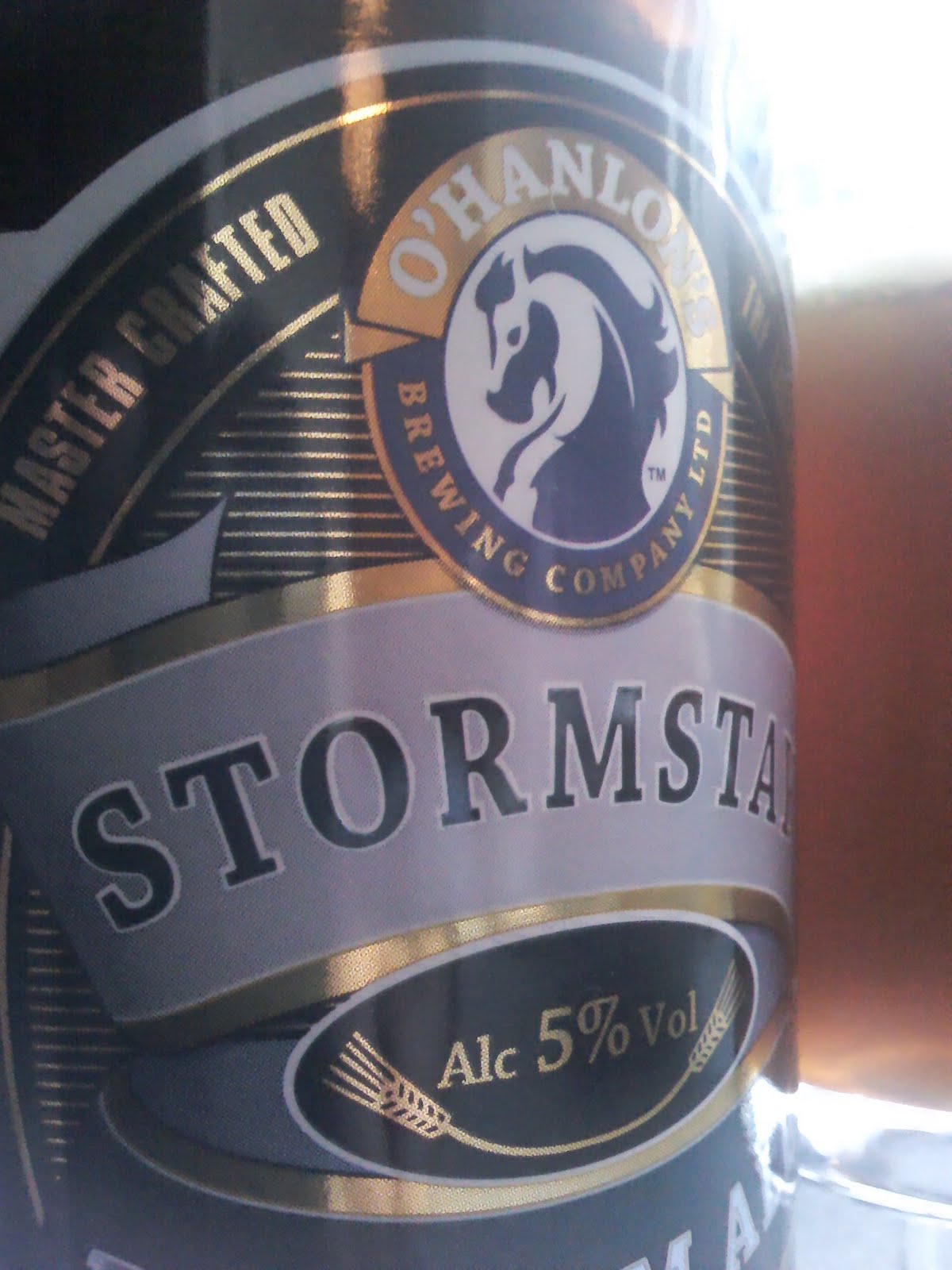
Given that the Breaking Bad DVDs were a present from my brother Matthew and his wife Angela, it was nice to accompany the conclusion of Season 2 with one of their latest homebrews: Amarillo Easy (4.1% abv). It was appropriately brewed with an American hop, Amarillo (like the O'Hanlon's Stormstay ale I enjoyed recently - which incidentally also contained crystal malt... not crystal meth).

And the Amarillo Easy was a great match for the drama, showing the verve of a New World pale ale but with a welcome lightness of touch, plus just a hint of that faint horse blanket aroma reminiscent of a good Belgian ale, all balanced out with the sweetness of caramelised brown sugar and a satisfyingly long finish.

Beer and drama.

27 May 2011

Balance – is it as important in beer as it is in wine?

I've had a few beers lately that I've really enjoyed and that, when I thought about it, shared a common characteristic: balance. Or drinkability, for want of a better word. Tasty, refreshing and with sufficient interest, but not hitting you over the head like a lunatic and saying how manly they are.

With beer, you could draw a straight line and write the word 'challenging' at one end and 'drinkable' at the other. Now I might be totally wrong, but I suspect there's a fashion at the moment in the craft beer world for stuff that errs more towards the challenging or extreme. Some of these beers can be really interesting to drink - but personally I sometimes find the first sip is the one I enjoy the most. And that's not ideal. After three or four gulps of a more extreme beer my palate can feel like someone's been at it with a steam-powered wallpaper remover. Interesting flavours, challenging, but not something I'd necessarily want to drink regularly. Perhaps this kind of beer is playing to a macho I-can-eat-a-hotter-vindaloo-than-you mentality. You can't imagine many women being daft enough to bother with some of these drinks beyond the first sip.

Of course it depends on the occasion; there's a time and place for a more extreme beer. And it's worth noting the caveat that more extreme beers can still be in balance; choc-full of flavour but with all notes singing in harmony.

But the beers I tend to enjoy most are the ones where everything is nicely in balance and that I don't tire of after a few gulps. And by that I don't mean boring; it's easy to confuse the idea of balance with lack of flavour. It's not that at all - sometimes it might even be the addition of more flavours, sometimes it might be fewer, to strike the balance. A food analogy would be using a pinch or two less of chilli powder to tone down the spice, or perhaps adding a squeeze or two of lemon to freshen it up.

Like anything sensual, it's of course subjective to some extent - one drinker's idea of balance won't be the same as another drinker's. Some of us prefer more bitter flavours, for example. It's all about personal taste, as well as mood, context, what you're eating (if anything) - the time of year, even. Which are some of the things that make food and drink so interesting.


So what were the finely balanced beers I've had recently that slipped down so easily? The first was the acclaimed El Bulli chef Ferran Adria's beer, Inedit, brewed by Estrella Damm – nothing exceptional you might think on trying it, but an intriguingly light mouthfeel, and just so damn tasty and refreshing. Perhaps a touch sweeter than I'd regularly go for and it may not be earth shattering but, as was intended with this brew, it's very food-friendly.


Another very nice beer I had recently was Stormstay Premium Ale, from O'Hanlon's Brewery in Devon, which is also a beer that I suspect might not satisfy the label drinkers looking to tick off the latest new world hop bomb. It struck that fine balance between hops and malt, with a subtle caramel depth underpinning the fresh green hop flavours. I really enjoyed this beer. If it was a stranger at a party it wouldn't skip quickly from person to person and talk about itself as certain other craft beers might; instead it'd be an understated but likeable presence with a touch of class. I thought it had a nice balance and a slight zip of acidity reminiscent of a good sparkling wine.


Going back to the fashion for extreme beers: it does seem to be specific to beer. Wine writers seem to be more preoccupied with elegance and structure. The reason for this difference, I'm not sure. It could quite simply be that when we drink a glass of beer or a glass of wine, we're looking for different things, and the difference in the tone of coverage reflects that. Perhaps an extreme IPA is only meant to be enjoyed for a few sips - that's the whole point, it's not designed for session drinking.

Or another theory could be that the craft beer revolution - for want of a less tabloidy term - is at an earlier phase than that of wine drinking (if that's the case it's ironic, given the long history of beer brewing and drinking in Britain). Perhaps the over-the-top late-hopped IPAs or quadruple imperial black quadruple chocolated stouts (I exaggerate) are the beer equivalent of the over-oaked chardonnays or the harsh one-dimensional sauvignon blancs wine lovers tired of to some extent in the 1990s and early-2000s, and beer fashions will evolve in much the same way over time. If this is the case, some classy but currently underrated more traditional British and Belgian ales, for instance, might enjoy a resurgence as beer drinkers become weary of yet another new wave British or American brew. When I drank a couple of Rochefort ales recently I was thinking what classy brews they were.

It's all about time and place. Sometimes the grapefruity hit of a New Zealand sauvignon blanc or an American IPA just hits the spot, just as a gin and tonic or a really very hoppy pale ale does, but at other times the moment calls for a deep, mellow porter by the fireside, or a savoury, herby syrah from the Northern Rhone. More often you're going to want the over-the-top hoppy pale ale as an aperitif as you would the G&T; the less extreme ales will more likely do you for a meal or a session.

But if beer wants to catch up with wine as a respected match for food, I think there might just need to be a slight shift in emphasis towards balance. Good Italian wine is often so very food-friendly thanks to its pure fruit flavours and fresh acidity (not to mention its sense of place), and it doesn't need to shout about itself. Over-oaked fruit bomb wines, on the other hand, are less likely to complement food quite so easily. I'm certainly not saying it's impossible to match foods with drinks that have extreme flavours, but it is more tricky.

The key point is that there's a time and a place for any well-made drink. But if beer wants to gain more respect at the dining table, and among drinkers generally, I'd say balance is an important thing to bear in mind in the long run. The craft beer movement will struggle to win over set-in-their-ways Stella drinkers on the one hand or set-in-their-ways Bordeaux drinkers on the other if it tries too hard and veers too far towards the extreme.

*The picture at the top is a pint of Timothy Taylor's Landlord on cask and some mini fish'n'chips. Lovely.
*Anyone in Leeds reading this can buy a 75cl bottle of Inedit from Latitude Wine for just under a fiver, or from Harvey Nichols for just over a fiver.

23 May 2011

Supermarkets: bringers of affordable food & drink to the masses, or unethical corporate giants?

I chipped in to an interesting mini-debate on twitter yesterday about supermarkets.

Daniel Primack of Around Wine said: "I've never underst'd why wine writers cover s'mkt wine. Worst case ppl stop buying in s'market and buy from Indy."

A very valid point. Wine writer and Saturday Kitchen presenter Tim Atkin replied: "Partly because very hard to buy from the bottle by indies unless you live nearby. And 80% of wine sold there."

I chipped in: "Tricky one, but plus-point of s'mkt recs is steering casual buyers to more interesting buys & without patronising them."

I also made the comparison of millionaire celebrity chefs preaching to the public to buy organic chicken. Yes, in an ideal world battery chickens would simply not exist and everyone in the country who eats meat would buy free-range, organic, or at least local. But the principle of someone who is very wealthy and privileged advising those who are neither, about their moral judgments, is on shaky ground. After all it's much easier to take 'ethical' purchasing decisions when you're rich enough to do so. When every penny counts, your child's nutrition will probably come above the welfare of the chicken. And poor people who can't afford one car, never mind two, or one foreign holiday in their whole lifetime, never mind two every year, aren't preaching to celeb chefs about how they could look to reduce their carbon footprints.

Us wine lovers also need to face up to another troublesome issue: just how sustainable is wine full-stop, whichever retailer you buy it from? Just 750ml of liquid (which might have been produced mainly by low-paid workers) in individual bottles that have been shipped across the world must have a sizeable carbon footprint. But that's another issue.


I totally agree with Daniel Primack's fundamental point that no-one has to buy any wine (or meat) in the supermarket – as he says, there are plenty of decent £7 wines in the independents and, actually, you might probably get more for your money that way. I believe in supporting local, independent businesses where you can. The local businessperson has a passion for what they're selling, they live where they do business, and as a result they care about quality rather than just making money. The independents will also pay their fair share of business taxes, unlike the corporations, and will be focal points of local communities. What we do when those same independents become successful multinationals because we've all supported them, again, is another interesting issue…

But going back to supermarkets, the two top concerns for most people are price and convenience when they buy food and drink. Not everyone treats wine any differently from all the other brands available in the supermarket – it's only the wine buffs who spend many of their waking moments thinking about the stuff, who would enjoy browsing online or in a local independent (if they're lucky enough to have one) to get the more interesting and unusual bottles. For everyone else, if they can lob a couple of recognisable and consistent £5 bottles into their trolleys during their weekly shop, why would they go to the extra cost and inconvenience to shop at an independent? Because if they did, it would mean either a) going several miles out of their way just to get their couple of bottles of wine for the week, or b) spending extra time online to buy their wine (with the two bottles costing say £7 each at the independent, so £14, plus a say £7 delivery charge, so £21 for two decent bottles).

I'm playing devil's advocate. I don't earn much money, yet I'm still able to take the extra effort to buy ethical meat and more interesting wines where I can (but by no means every time, admittedly), from independent retailers. But that doesn't mean I think everyone else could do. In an ideal world, yes, and I agree with the basic point that the wine trade should do what it can to encourage independents over supermarkets. And not just the wine trade.

But in the current climate more than ever, us wine geeks need to remember that although it's just simple alcoholic grape juice inside the bottle, we all look at the stuff very differently.

10 May 2011

Pasta, English asparagus and Greek white wine, Domaine Gerovassiliou Malagousia 2009

Pasta with English asparagus (from Leeds' Kirkgate Market), some other veg, a slosh of white wine, olive oil, garlic and basil. Stirred through with a cheeky slice of butter (I'm not a purist) and served with a fresh white wine from Greece - the one that was thrown in with the pasta.

Nice to drink something that isn't an 'international' variety: this is made from the ancient Malagousia grape, its freshness zinging from the glass, as vibrant as a clear blue sea beneath old white-washed houses.
It won a Decanter Gold Medal and was awarded Best Value White Wine of the Year by the Wine Gang.

Funny how your eating and drinking habits change with the weather. Spring has arrived.

Domaine Gerovassiliou Malagousia 2009, Laithwaites, currently £8.99 a bottle reduced from £13.99

8 May 2011

My Wedding Day


I got married! Which is why I've been a bit absent from here lately, but I'm back now.

An amazing day, shared with our loved ones. We won't forget it.

To cap it all off, we were extremely lucky to have some very talented people on hand to make it even more special…

We genuinely felt privileged to have Luke Downing (of the exceptional Dough Bistro) creating our food. Slow-cooked Yorkshire short-horn beef and New Moon (Leeds) ale stew, with roast potatoes and Yorkshire Blue cheese, was as sublime as it sounds. As was the non-meat option: vegetables in Woodlesford (Leeds) white wine, coriander and tomatoes, with wild rocket and parmesan. Again, fantastic. And later an amazing evening buffet… all despite the non-existent kitchen facilities at our (nevertheless beautiful) venue.

My eldest brother Matthew brought a couple of kegs of fantastic beer he'd brewed especially for our wedding: a pilsner and an ale. Much as the words evening buffet don't adequately describe Luke's creations, the term homebrew goes nowhere near describing Matthew's beers. Really brilliant; craft ales of a commercial standard, but brewed especially for us on our big day. Extra special. 


For our sparkling wine we went for Roche Lacour 2007 from Limoux in the south of France (from Laithwaites). Made in the traditional champagne method but without the razzmatazz of the champagne name. Gorgeous stuff.

With the meal, our red wine was Capucine, Les Ollieux from Corbieres in the south of France; the white was the Naked Grape Riesling from the Pfalz in Germany.

Also a special word for our brilliant photographer Mark Tattersall, who crafted incredible images despite the piercing light and crazy winds; and also our DJ Ossie - who provided a memorable end to the night, after a very memorable day.

23 Mar 2011

Beer Ritz Is Back!

Great news for beer fans in Leeds and beyond - Beer Ritz is back from the dead!

Zak Avery announced on twitter today that the store is open once again, having closed its doors last week seemingly for good. Here's hoping this gem in Far Headingley is here to stay.

The Leeds skies are lit up with long-awaited sunshine, Easter is coming, Pulp are headliners at this year's Leeds Music Festival; the season of rebirth. Welcome back Beer Ritz.

17 Mar 2011

Watch Your Language

Language is a funny thing. I mentioned in a recent blog post how the word chav has entered English in recent years. Who first said the word? Where did it come from?

Language constantly changes - words go in and out of fashion, new words appear, existing words change their meaning. If we get annoyed by this we're kind of missing the point - after all, if language never evolved, we'd still all be talking like cavemen. Or talking like whoever came before the cavemen. Cavemen were probably saying the same thing.

In the late-90s I think, we had the rise, literally, of the so-called Australian inflection - the thing where people raise the intonation in their voice at the end of a sentence, even when it's not a question. That was apparently due to the popularity of Australian and American TV dramas.

And remember the Chilean miners' crisis a few months ago? As well as thinking about what a truly horrific experience it must have been for the miners, I was also left confused as to why the newsreaders started saying Chill-ay-an halfway through, instead of Chill-ee-an. Who gave the order?

Remember Slob-o-dan Milosevic? Now he's Sl'bodan. And Benjamin Netanyahu? He's Bin-yam-een. Then Haiti's capital Port-au-Prance became Port-au-Prince - and back again. They never decided on that one. Self-promoting was then renamed social networking, around the time people stopped saying Hi and said Hey instead.

Margaret Thatcher made a speech as prime minister back in the 1980s when she said: "There is no such thing as society; there are individual men and women, and there are families." It's now twenty-odd years later, and the same philosophy has been rebranded as the big society. From no such thing, to big! Language is a funny thing.

15 Mar 2011

A sad week for Leeds drinkers: Beer Ritz and Oddbins close their doors for the last time

It's a sad week for beer and wine drinkers in Leeds. First of all, the news came that two of the city's four Oddbins shops – Albion Street and Headingley – are among the 39 Oddbins stores around the UK being closed down (the Chapel Allerton and Street Lane stores are apparently remaining open). And then came the completely unexpected news today that specialist beer shop Beer Ritz, managed by beer writer Zak Avery, has ceased trading. In fact the term 'ceased trading' doesn't do it justice. Beer Ritz is something of a legend, with an incredible range of beers and truly knowledgeable staff: time has been called at a party no-one wanted to end.

Oddbins in general has come in for a lot of flak over recent years, with several wine writers pointing the finger in particular at the chain's previous owner, French company Castel (which bought Oddbins in 2002 and sold it three years ago), for presiding over its downfall. Writing in the Observer back in July 2008, Tim Atkin called Castel's ownership of Oddbins "a disaster". He said: "Most of the good buyers have left, the range has been reduced, prices have increased and many of the famously enthusiastic, over-qualified shop managers have set up on their own or moved to other companies. There are still good people at Oddbins - not least the two remaining English wine buyers - but the business is a mess."

From personal experience, I'd like to reiterate: there are still good people at Oddbins. As a relatively regular shopper at the Albion Street branch, I can say the team there are absolutely superb: full of enthusiasm, taking pride in what they're doing, keen to engage with customers, knowledgeable. But… the range in the store was at times patchy, and pricing has been a problem. Offering 20% off if you buy six wines gives the impression (true or not) that you're paying over the odds for a single bottle, and that's a major problem for city centre stores aiming to attract regular one and two-bottle purchases. And it has to be said the growing empire of supermarkets over the past decade or two must also have been a huge problem for stores like Oddbins. We're all buying everything in supermarkets and online. Why take a detour to a wine shop when you can lob in a couple of buy-one-get-one-frees into your supermarket trolley, along with every other consumer product you might ever need, on your weekly shop? We're giving a bottle of wine the same amount of respect as a ready meal.

With Oddbins, if Atkin and others are right then it's the same old story of mismanagement at the top resulting in pain for those on the shop floor. Those who've been doing a fine job, especially given the difficult circumstances, are the ones who are now losing their jobs. A theme of our times. And it's more than their jobs. You only have to read this account from a member of the team at Beer Ritz to realise that. You only have to speak to a member of staff at Oddbins in Leeds city centre to realise it: they care about what they do.

There seems to be a big appetite for high-quality, interesting and varied drinks in Leeds, and there are several very good independent bars and local breweries. You'd think that a specialist drinks shop should thrive in the city. You just have to hope that independents like Latitude can find a formula for continued success. Because other than them, in the city centre we only really have Gerry's Wines & Spirits, Harvey Nichols and M&S with dedicated alcohol sections offering more than the usual suspects.

In the meantime, the staff from Beer Ritz and Oddbins should get together over a beer at North Bar, form a dream team and open a new wine and beer store of which Leeds can be proud. Because a future of supermarkets and the internet, and little else, is not an appealing one.

26 Feb 2011

Monkey Poo Coffee! Philippine Alamid Kopi Luwak (£14.99/50g, Sea Island Coffee)


I was sent a sample of this famous (notorious?!) coffee recently. It's the stuff that gets eaten by monkey or raccoon-type creatures called civets - a relative of the mongoose - who like the sweet taste of the berries. It then ferments in their stomach juices where it's partially digested, they poo it out, and then it's gathered up from their poo on the jungle floor, washed (the packaging stresses thoroughly, thank god) and dried, before being roasted as normal.

Jack Nicholson drinks this stuff in the film The Bucket List, in which he and his friend (Morgan Freeman) are both terminally ill and they go on a road trip armed with a list of experiences to try before they die.

It's not cheap at all, but it's a nice coffee, and good for novelty value. I tried the pre-ground stuff and prepared it simply in a cafetiere. A subtle, slightly smoky aroma and a fairly earthy flavour (which I suppose you might expect!), it reminded me of some Ethiopian (non-monkey poo) coffee I had recently at Opposite in Leeds' Victoria Quarter. That was quite light-bodied, almost like a cross between tea and coffee, and probably best drunk without milk to get the subtle aromas.

Philippine Alamid Kopi Luwak
£14.99/50g
www.seaislandcoffee.com

Chavs: Scum or Scapegoats?


Nothing to do with food or wine this, just something interesting I've noticed lately - how the word chav has increasingly entered common speech. Not just among schoolkids, but among adults who put themselves across as otherwise intelligent, broad-minded people. It's used on social media, in blogs, on twitter. And I wondered, why is there something about the word that doesn't sit quite right? When someone who's quite well-off uses the word, why does it seem just a bit unpleasant? Is it an acceptable word to use or not? Is it just harmless snobbery, if there is such a thing, or is it something more nasty? And then I noticed there's a book coming out later this year entitled 'Chavs: The Demonisation of the Working Class'. So, is chav-bashing the demonisation of the working class?

The joke seems to be: chavs are unemployed, or at least poor, lacking in class, and they all dress the same, and eat and drink the same things (as if the middle classes don't); they don't have much money or taste. That seems to be the joke. You read stuff on twitter along the lines of, "Ha ha, I just saw someone in a tracksuit who hasn't got a job like I've got, they don't do the civilised things I do, what a loser." The Top Gear school of satire.

Maybe using the word is a bit of a giveaway of your own politics. You're skating over the fact that the person in the tracksuit might not have enjoyed the same upbringing, the same life chances, you had. An insult for our 1980s-style times. Previously it was the Irish, blacks, gays, more recently asylum seekers and Muslims, now it's chavs.

Perhaps when we hear the word chav in 20 years' time, we might cringe a bit, like when we see a clip from a 1970s sitcom and the middle class characters are spouting casual racism about their next-door neighbours.

Or is it not so bad? Is it a harmless nickname for people who are lazy, antisocial, aggressive, uncivilised? Perhaps also it depends how you use the word?

But even if you say you're using the word against a certain type of person who doesn't work and doesn't apparently contribute much to society – isn't that still a bit nasty? Are you naturally morally superior to them? If you'd had their opportunities, their school life, been born to their parents, had their home life, done their jobs… who would you be?

19 Feb 2011

A Trip to Aldi: Ramon Lopez Murillo Rioja Reserva 2005 (£5.99) and Finchley's Ales Golden Pale Ale

A trip to B&Q on a Saturday afternoon - who could resist calling into Aldi next-door and taking a look around its random selection of goods? Especially its alcohol section, with bizarre looking bottles of Grappa from holidays past and intriguing cans of 'premium lager'.

I came away with a bottle of Rioja, a bottle of Aldi's own Golden Pale Ale and a bottle of Wychcraft Blonde Beer. So all in all I was quite restrained. I've had the Wychcraft Blonde before, so I was more interested to try the wine and the pale ale.

I found the pale ale a bit of a strange one, with a bittersweet flavour and an aftertaste that I personally didn't enjoy. It actually reminds me of Desperados a bit, which isn't a brilliant thing for me - I realise Desperados has a bit of a cult following (it's a beer flavoured with tequila and other stuff like citric acid and sugar) but it's not one of my guilty pleasures. And I was expecting a pale ale, not an alcopop/beer hybrid.

But I've enjoyed the Rioja. I suppose £6 isn't the absolute cheapest of cheapsville - there were one or two bottles of red around the £3 mark in Aldi - but you still might not expect great things. But it's nice. Perhaps it helps that for some unknown reason I've not had a Rioja for a while, so maybe I'm more forgiving because I was ready for one. But there's a pleasant nose of cherries, plums and rosemary, with a thin twist of sweet cigar smoke. That's followed up by more cherries and herbs in the mouth, with a good acidity that keep things fresh. A decent and very easy drinking glass of wine. And a nice softness to it that you only get from an aged wine that's had the chance to grow into its own skin.

5 Feb 2011

St Hallett Barossa Riesling 2009 (£4, Co-op)

This is a real bargain.

Flinty on the nose, minerals, rocks baking in sunlight. In the mouth, sherbert lemons and pear drops minus the sickly sweetness, with a waxy edge. A shaving of coconut on the finish.

Grown-up traditional lemonade. An early evening refresher, sweeping away the cobwebs of the day. At this price, snap it up.

16 Jan 2011

Monte La Sarda Garnacha 2009 (£7.49, Oddbins)

This is a really, really good wine for the price, from Bajo Aragón in Spain, on the outskirts of Zaragoza. I don't know what Oz Clarke thinks of it, but I strongly suspect he'd be a big fan, given that he loves the upfront crunchy fruit flavours of a good Spanish garnacha. This one's got an almost chewy texture, lovely liquoricey undertones and the flavour just lingers in the mouth.

With wine tasting notes, you can often find that the points of reference are the kinds of things you've never actually tasted. Rose petals, violets, sweaty saddles, petrol, pithy citrus fruits from the rolling Tuscan hills. Well, this garnacha reminded me of black jacks. And I say that as a compliment - it's bloody lovely stuff. But it made me think of those dark, sticky sweets that stuck to your back teeth in the 80s.

It's worth noting this wine's even better value if you buy a case of six from Oddbins (the case can be mixed) - it's then just £5.99 a bottle. I think you'd do well to fine a better sub-£6 wine.
As Oz himself said of Spanish garnacha: "You don't talk about [it] - you just say bloody hell that's good... let's have some more!"

Monte La Sarda 2009, Spain
£7.49 (£5.99 when you buy six)